Emergency Response Training

California businesses weighing their first aid training options for employees need to meet Cal/OSHA's Title 8 regulations, which cover emergency procedures and hazard communication before anyone works unsupervised. Golden State Health and Safety Solutions helps employers satisfy cal OSHA first aid training requirements through OSHA 10-Hour and 30-Hour training, hazard communication, fire preparedness, electrical safety, PPE training, confined spaces safety, lockout/tagout procedures, fall protection, and many other OSHA-compliant online safety courses. Whether a business needs workplace first aid certification that California inspectors will recognize or prefers blended first aid training that California teams can complete on their own schedule, each course is built around California's specific regulatory landscape to enhance workplace safety and make sure your program holds up when it's tested.
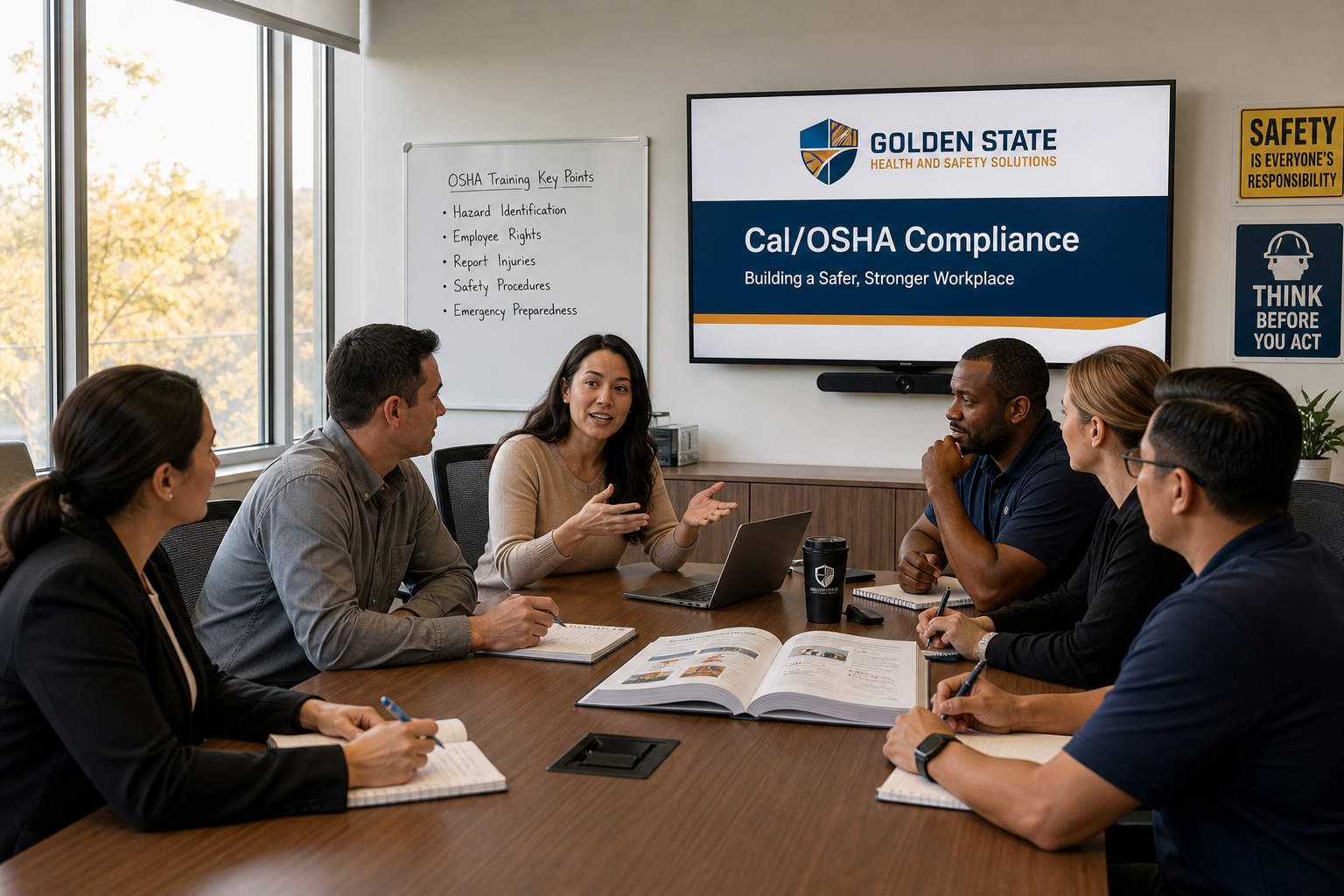
Before a new hire ever works unsupervised, California law requires employers to train them on the hazards specific to their job, with emergency procedures woven into the company's Injury and Illness Prevention Program. The rules for First Aid Training for Employees live in Title 8, Division 1, Chapter 4 of the California Code of Regulations, and they split into separate standards for construction and general industry.
Cal/OSHA often asks more of employers than federal OSHA does, so meeting the state's bar means looking past the national baseline. Golden State Health and Safety Solutions helps California businesses close that gap with expert-led instruction grounded in real-world emergency response experience.
Title 8, Division 1, Chapter 4 lays out the regulatory framework, splitting into Construction Safety Orders and General Industry Safety Orders, each with its own obligations. Employers should confirm which subchapter applies to their operations rather than assume the rules are identical across industries.
Training needs to cover the hazards specific to the job before an employee ever works unsupervised, with emergency procedures, hazard communication, and equipment use all tied back to the Injury and Illness Prevention Program. Golden State Health and Safety Solutions' flexible delivery options, on-site, online, and hybrid, flex around whatever shape a California workforce takes.
Safety coordinators who want the full picture can turn to this detailed breakdown of Cal/OSHA training requirements to document compliance and strengthen their workplace safety program.
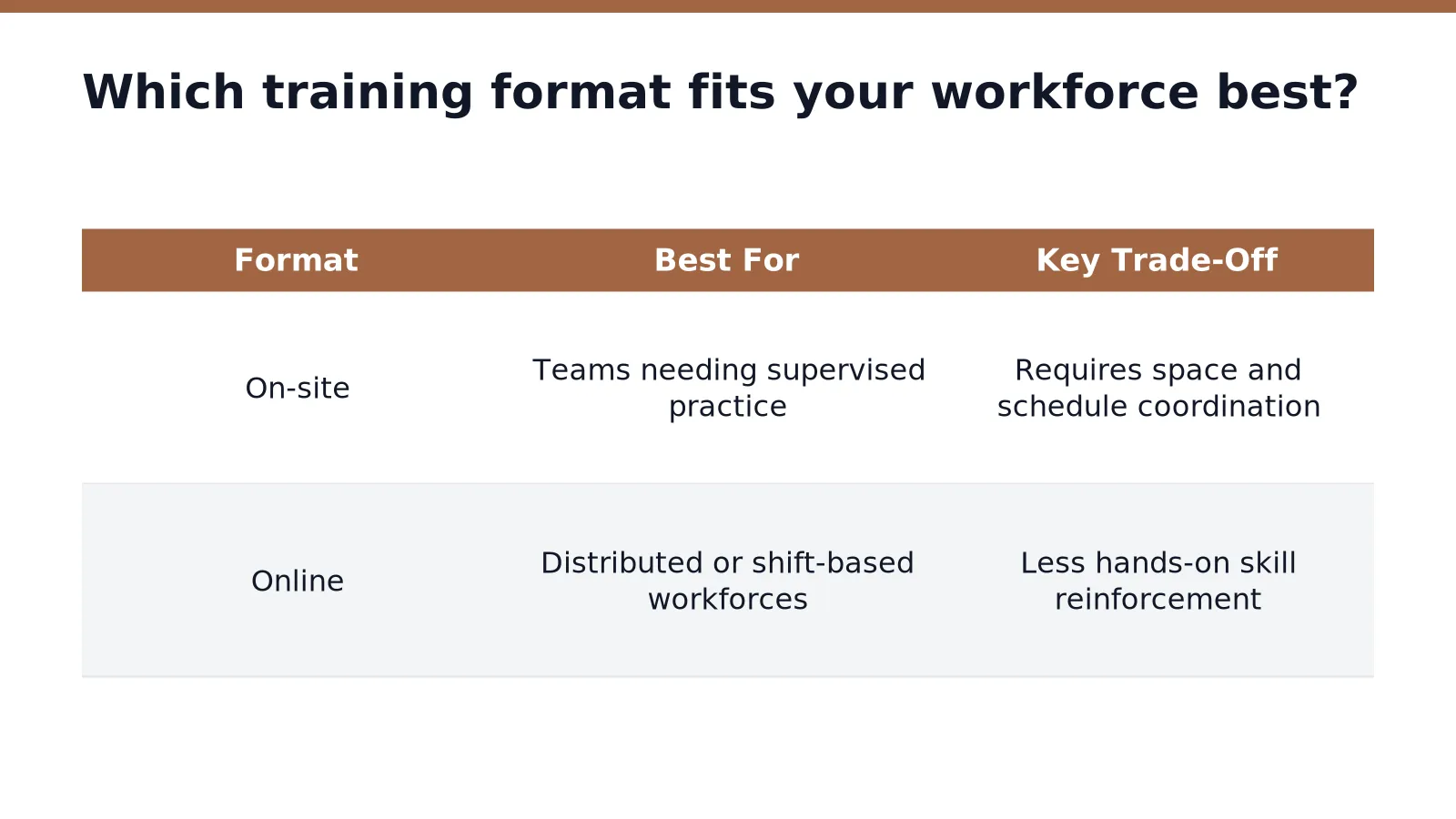
Choosing a training format comes down to balancing operational disruption against how well employees actually retain the skills. California employers typically weigh on-site, instructor-led sessions against self-paced online courses, and each one suits a different kind of team. Get the choice wrong, though, and employees end up underprepared in the moment it matters most.
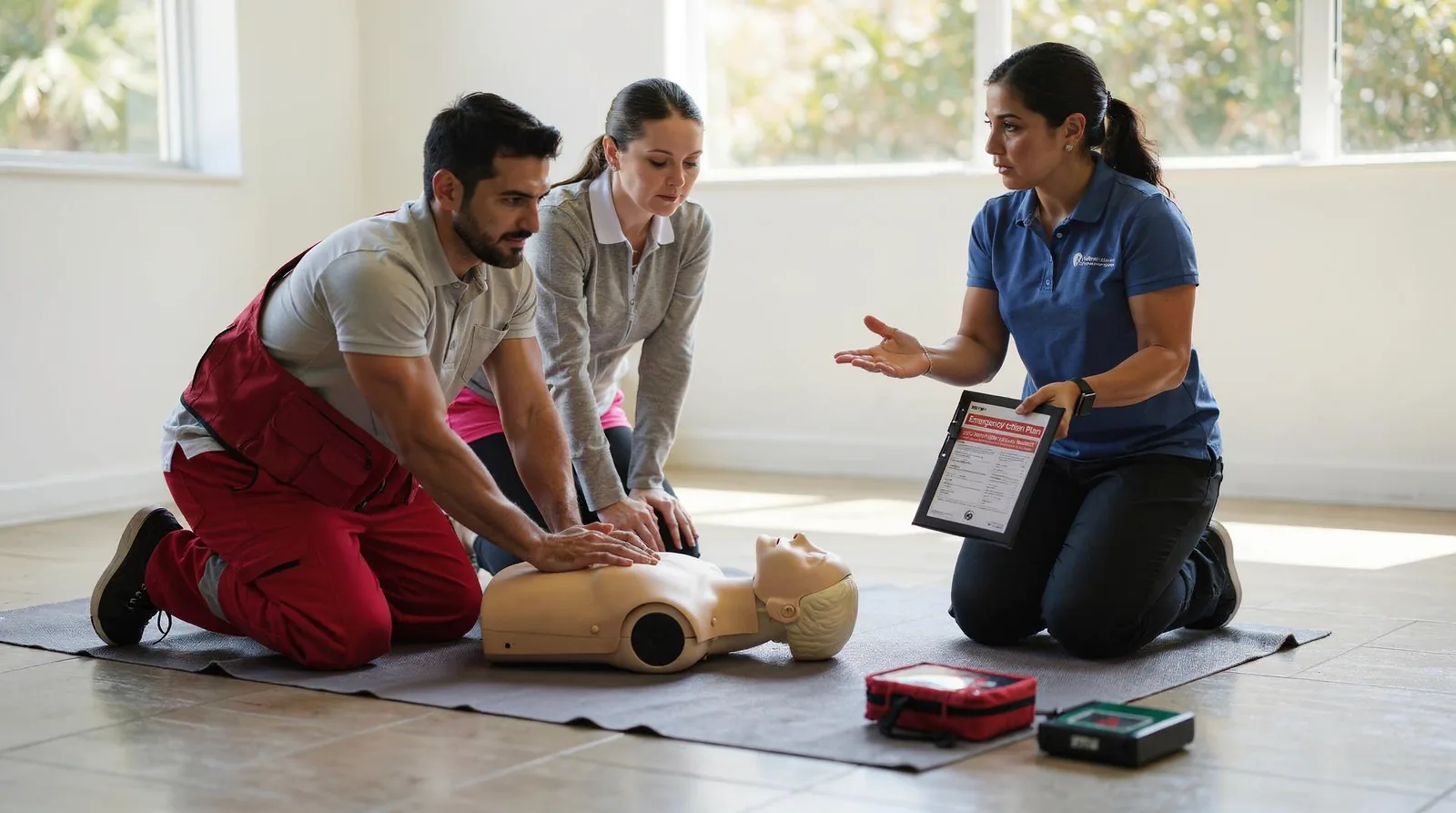
On-site training puts an instructor right at a California business's own location, so the whole team learns together, practices lifesaving skills on manikins, and walks away certified without anyone leaving the building. It's the better fit for organizations that want hands-on practice under direct supervision. Pulling it off just takes a bit of planning: picking the right course, confirming headcount, finding the space, and setting a schedule that works around normal operations.
Online courses live on a self-paced platform, so employees can work through OSHA-compliant training anytime, from any device, and walk away with immediate certification the moment they finish. That flexibility is a real advantage for shift workers and remote staff. Many of the courses come in both English and Spanish, and bilingual instructors are on hand for businesses that need multilingual training delivery.
Golden State Health and Safety Solutions delivers both formats across California, including onsite safety training for small businesses designed to keep operational disruption to a minimum. Whichever path a business takes, First Aid Training for Employees satisfies Cal/OSHA's documentation requirements as long as it's tied to the Injury and Illness Prevention Program.

Choosing a First Aid Training for Employees provider takes a closer look than just checking credentials on paper; real-world expertise is what actually closes the gaps that show up during an actual crisis. Golden State Health and Safety Solutions pairs real-world emergency response experience with certified instruction, delivered through flexible delivery formats that include on-site, online, and hybrid models.
California holds its instructors to state-specific standards. The Commission on Peace Officer Standards and Training (POST) sets minimum course and instructor requirements for first aid training under Title 22 regulations, so confirm that any instructor carries current certifications aligned with your industry's governing bodies.
When a compliance deadline is closing in, speed matters. A provider that issues same-day or instant certifications takes away the risk of employees working without documented credentials, while waiting weeks for paperwork opens up liability exposure no California business wants to carry. Golden State Health and Safety Solutions issues certifications the moment a course wraps up, so workforce documentation stays current.
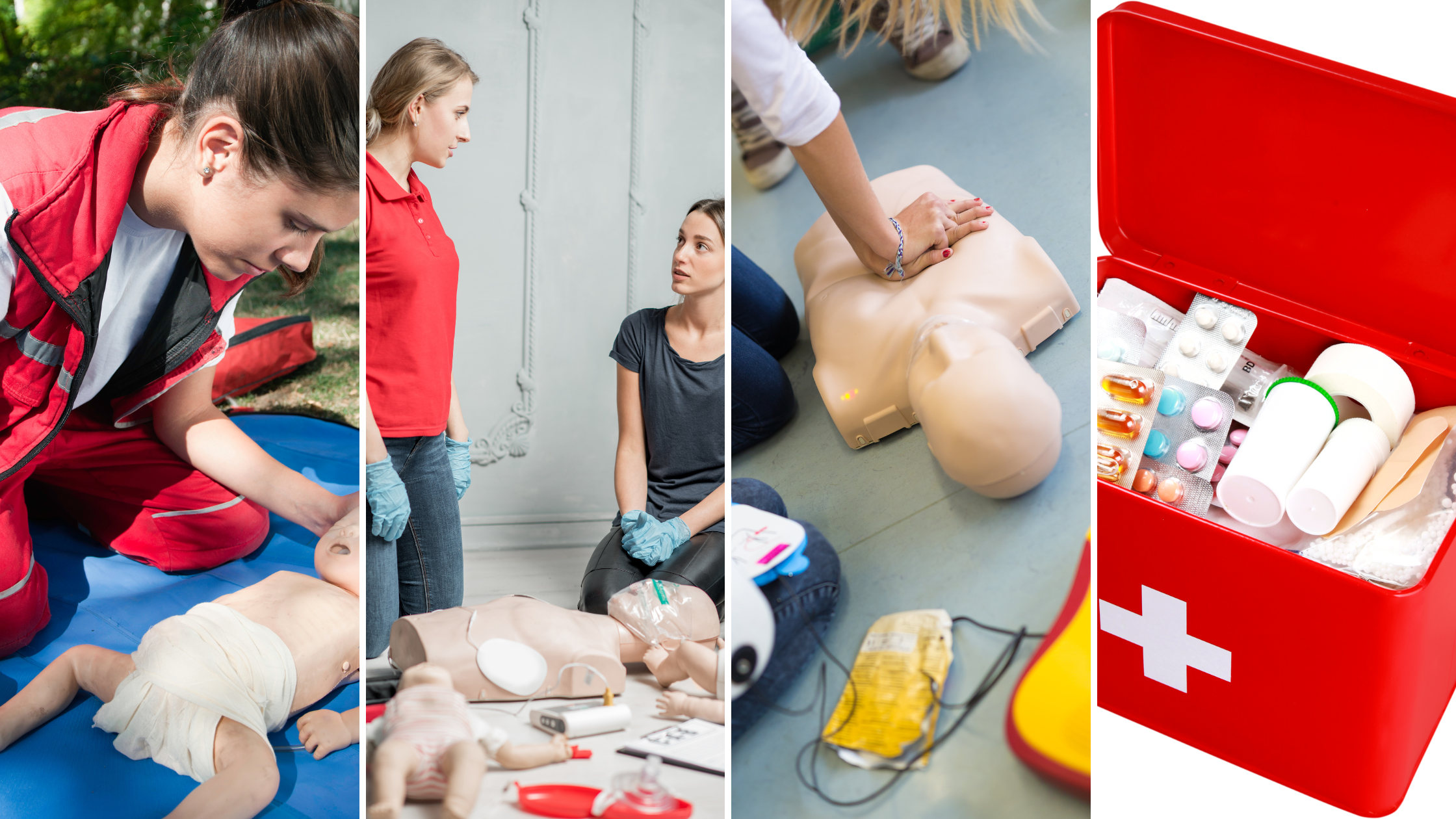
Every workplace needs its own protocols. Healthcare settings call for American Heart Association Basic Life Support certification covering adult, child, and infant CPR, while construction firms need training aligned with Cal/OSHA's Title 8 standards. A good provider tailors its curriculum to a sector's exact requirements instead of handing out generic content, and a company serving businesses statewide can deliver consistent onsite CPR and First Aid training across multiple California locations, so every facility meets the same standard.
California law requires employers to train new hires on the hazards specific to their job under Title 8 regulations before they ever work unsupervised, with emergency procedures tied to the Injury and Illness Prevention Program.
On-site training brings an instructor right to a California business's location, so the team can practice lifesaving skills on manikins and complete certification without anyone having to travel.
California employers who match their training format to their workforce and who verify instructor credentials against state standards put their teams in a far better position to respond when an emergency actually happens. Whether a business leans toward on-site practice or online flexibility shapes how well employees hold onto those lifesaving skills long after the course ends. Reviewing the current Injury and Illness Prevention Program against Title 8 requirements is the surest way to catch gaps before an incident exposes them. Pick a provider whose curriculum matches your industry's specific protocols and issues certifications right away, then get new hires trained before they ever work unsupervised.